Why Workout Clothes Feel Tighter in the Gym Changing Room
Quick Answer: Three things change between your bedroom and the changing room. Humid air makes fabric cling and slide less, so garments feel gripped rather than skimming. Warm skin swells slightly and holds a thin film of moisture, adding friction. And dressing while rushed or already warm means fabric goes on without settling into place. The garment did not shrink - its friction against your skin went up. Dressing before you warm up, and choosing fabrics with a higher elastane content, both make a visible difference.
It is one of the most common and least discussed reasons people size up unnecessarily, and then own leggings that slide down for the next year.
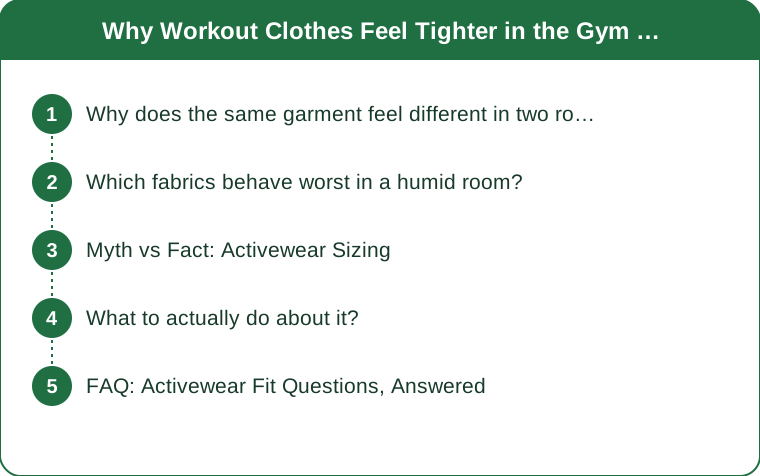
Why does the same garment feel different in two rooms?
Because activewear fit is as much about friction as it is about dimensions.
Humidity changes how fabric moves on skin. A changing room is warm and damp - showers, bodies, poor ventilation. In humid air, a thin film of moisture sits on your skin, and fabric that slid smoothly at home now grips and drags. Grip reads as tightness even though nothing about the circumference changed.
Warm skin is slightly larger skin. Vasodilation from warmth increases blood flow near the surface, and mild swelling in the hands, feet, and thighs is normal. It is a small change, but compression fabrics are designed to sit close, so a small change is noticeable.
Fabric needs a few seconds to settle. Elastane-blend knits stretch and then recover; pulling leggings on quickly leaves the fabric unevenly distributed, bunched at the ankle and stretched at the knee. Ten seconds of smoothing from ankle to hip genuinely changes how a pair feels for the whole session.
And you are usually standing in worse light and a full-length mirror, often for the first time that day. This affects perception rather than fit, but it is part of why the changing room verdict feels so definitive.
One clue it is friction, not size: if the garment feels tight but leaves no marks on your skin after a session, circumference is fine and grip is the issue.
Which fabrics behave worst in a humid room?
Predictable ones, and the label tells you most of it.
Cotton blends are the worst offenders. Cotton absorbs moisture and holds it, becoming heavier, clingier, and slower to release. A cotton-blend legging in a damp changing room grips noticeably more than the same cut in polyester.
Low-elastane fabrics feel tighter and recover slower. Below about 12% elastane, activewear has less stretch to give and a slower return. Around 18 to 25%, the fabric accommodates movement and swelling much more forgivingly - and this is one of the few label numbers actually worth reading.
Brushed and buttery-soft finishes grip more. The raised surface that makes them feel lovely dry also increases the contact area with skin, which increases friction when damp. They feel great at home and clingy in a humid room - a real trade-off rather than a defect.
Nylon-elastane blends generally slide best. Nylon has a smoother hand than polyester and handles moisture better than cotton, which is why premium activewear leans on it.
Seam placement matters more than fabric in some cases. A flatlock seam sitting on the inner thigh will announce itself in humidity regardless of what the fabric is doing. If the tight feeling is localized to one line, it is a seam issue, not a sizing one.

Myth vs Fact: Activewear Sizing
Myth: if it feels tight in the changing room, size up. Fact: sizing up for a humidity-driven friction problem gives you a garment that sags and slides in normal conditions. Test fit at home, at room temperature, on skin that is not warm - that is the honest baseline.
Myth: compression should feel restrictive. Fact: true compression is firm and even, not pinching. If it digs at the waistband, restricts a deep squat, or leaves deep marks 30 minutes after removal, it is too small regardless of the label.
Myth: fabric stretches out permanently with wear. Fact: quality elastane blends recover after washing. What does happen is temporary relaxation within a session - most leggings feel slightly looser 20 minutes in, which is why judging fit in the first minute misleads.
Myth: the same size across a brand fits the same. Fact: different fabrics within one brand’s own range vary by a full size in practice, because fabric weight and elastane content drive fit more than the pattern does.
Myth: tightness at the waistband means the waist is too small. Fact: often the rise is wrong for your torso, so the waistband is sitting at your narrowest point and being pushed by your ribs when you breathe. Same size, different rise, completely different experience.
What to actually do about it?
Adjust the conditions before you adjust the size.
Change before you warm up, not after. If you arrive already warm from a commute, give yourself two minutes to cool before dressing. The difference in how a garment goes on is immediate.
Dress in stages and smooth as you go. Pull leggings up in two or three passes, smoothing fabric from ankle to knee to hip. This distributes the knit evenly and removes most of the bunching that reads as tightness.
Dry your skin properly after a shower. Even slightly damp skin under compression fabric is the single biggest source of the gripping sensation. A minute more with the towel does more than a size change.
Judge fit after five minutes of movement. Do a few squats, walk around, then decide. Almost every legging feels different once the fabric has warmed and settled.
Keep a dedicated dry set for after showers. The clothes you put on post-workout onto warm, damp skin are the worst-case scenario. A looser cut for after is not indulgence - it is the correct tool.
And check the elastane number when you buy. If you regularly train in humid rooms - hot yoga, a busy studio, an under-ventilated gym - a higher-elastane, nylon-based fabric will simply behave better than a low-stretch brushed one, and you will stop blaming your sizing.
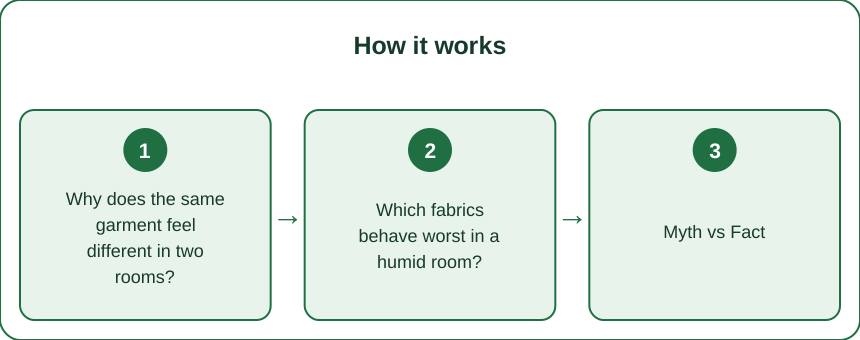
FAQ: Activewear Fit Questions, Answered
Should I size up or down in activewear?
True to your measured size in the fabric’s stated stretch. If you are between sizes, size down in high-elastane (20%+) fabrics and up in low-elastane ones, and always check the rise separately from the waist measurement.
Why do my leggings feel loose after 20 minutes?
Elastane relaxes as it warms, which is normal within a session and recovers after washing. If they are still loose the next session before warming up, the fabric has genuinely fatigued and the garment is nearing the end of its life.
Does washing shrink activewear?
Synthetics rarely shrink, but hot water and tumble drying degrade elastane, which causes both sagging and localized tightness as fibers fail unevenly. Cold wash, air dry, and no fabric softener - softener coats fibers and reduces both wicking and recovery.
Is it normal for the same size to fit differently across a brand’s ranges?
Completely normal, and it is fabric-driven rather than sloppy sizing. Treat each fabric family as its own size chart, and note which one works for you rather than which number does.
TL;DR:
- Changing-room tightness is mostly friction, not size - humid air, warm skin, and a damp film all make fabric grip.
- Cotton blends and brushed finishes grip most; nylon-elastane with 18 to 25% stretch behaves best in humidity.
- Dress before you warm up, dry your skin fully, smooth the fabric in stages, and judge fit after five minutes of movement.
- No marks on your skin after a session means the circumference is fine.
The expensive mistake is sizing up on a humidity problem and then owning a pair that slides down for a year. Test fit at home in normal conditions, buy for that, and treat the changing room as the challenging environment it is rather than the source of truth.
See It in Motion
Seen here: Super High Waist Embossed Yoga Leggings with Inner Pocket — shop it on bubblelime.com
Keep Reading
This article is for general informational and styling purposes only. Fit, sizing, and product availability may vary.