Why Brand New Leggings Slide Down — and What Fixes It
Quick Answer: New leggings slide down for four reasons: the rise is wrong for your torso, the waistband has no structural band and relies on fabric tension alone, the hip-to-waist ratio of the garment does not match yours, or the fabric is too slippery against skin. The fastest diagnostic is where they end up — sliding straight down means a rise or ratio problem, rolling over at the top means a waistband structure problem.
Sizing down is the most common response and it is usually the wrong one — it makes the hip tighter, which pushes the waistband up and over.
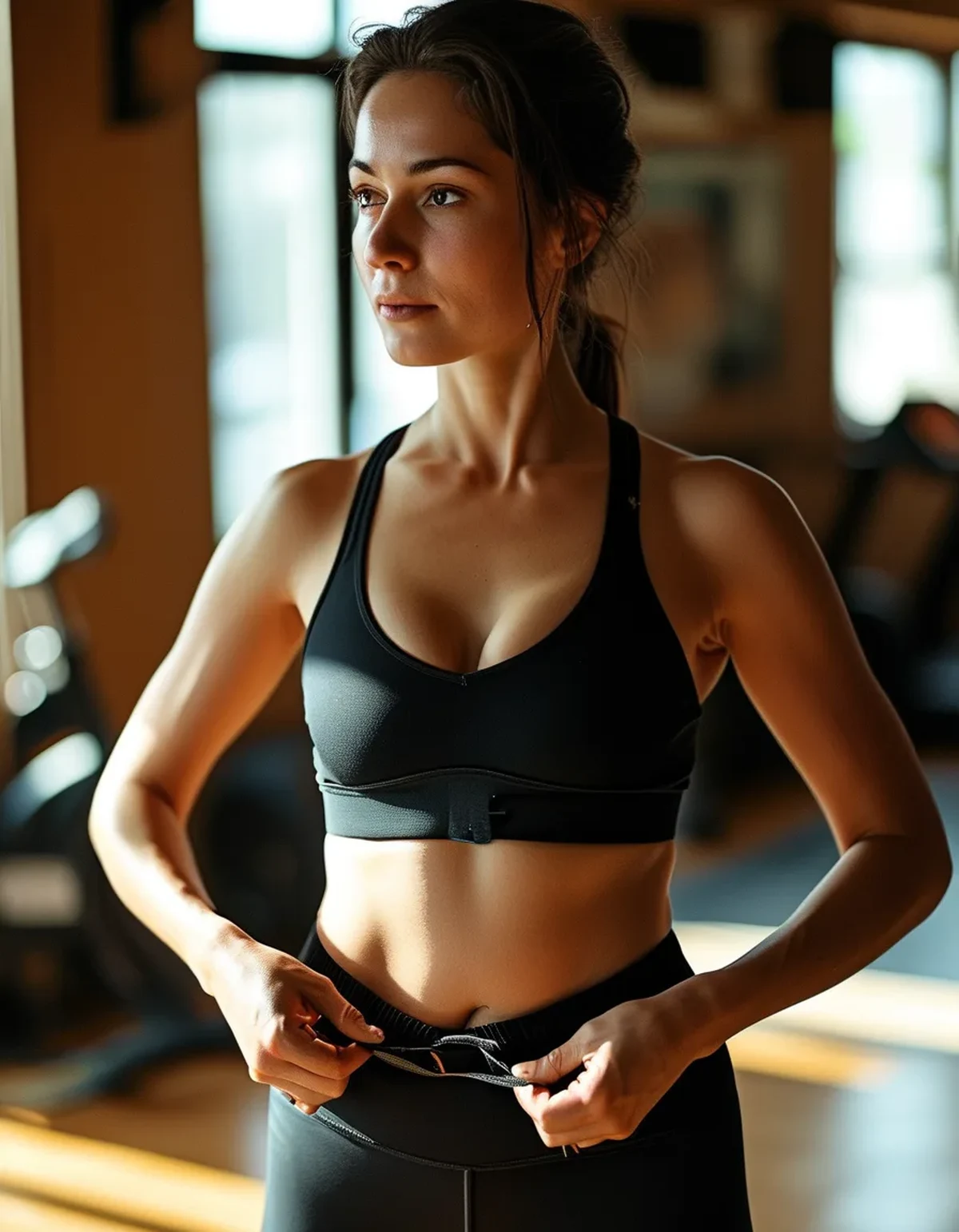
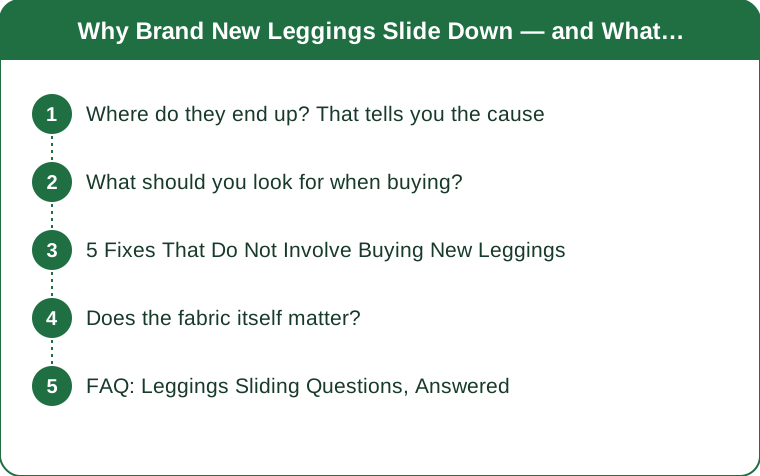
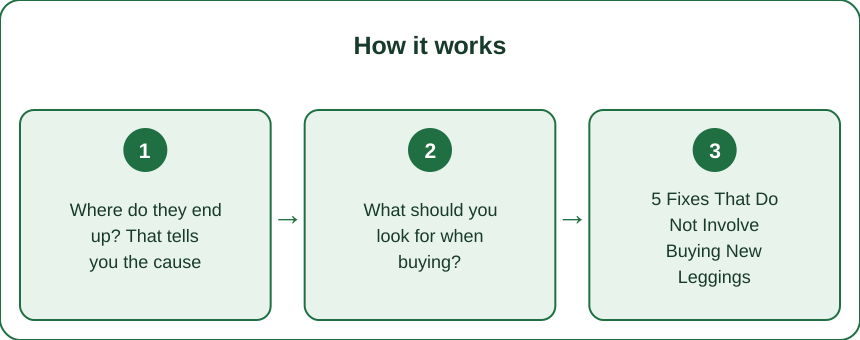
Where do they end up? That tells you the cause
Four distinct failure patterns, four different causes.
They slide straight down at the waist, evenly. The rise is too short for your torso, so the waistband is sitting below your natural waist where there is nothing to hold it. Gravity plus movement does the rest. This is the most common cause and it is a rise problem, not a size problem.
The waistband folds over on itself at the top. The band is being compressed from below by the hip and thigh. This means the garment’s hip-to-waist ratio is narrower than yours — the hip is tight enough to push fabric upward, and the band buckles. Sizing down makes it worse.
The back slides down while the front stays. A rise-and-shape mismatch, usually a garment cut for a flatter seat than yours. Look for styles with a contoured or curved back rise.
They creep down gradually over a session, from the crotch. Fabric is slipping against skin, usually a very smooth low-friction fabric with no silicone gripper, worn without enough compression to stay put.
One that looks like all of these: worn-out elastane. If a pair used to stay up and now does not, the waistband has lost recovery and no adjustment fixes it.
What should you look for when buying?
Five construction details that determine whether leggings stay up, none of which appear in the size chart.
1. A wide, structured waistband — 10cm or more. Wide bands distribute pressure across a larger area and resist folding. Narrow bands concentrate force and buckle. This single feature predicts staying power better than anything else.
2. An internal elastic band, not just folded fabric. Many leggings use a folded-over hem of the same fabric as the waistband. That relies entirely on the fabric’s own tension, which degrades. A separate elastic or a bonded band holds far longer.
3. A high rise, especially if you have a long torso. High-rise leggings sit at or above the natural waist, the narrowest part, where the body’s own shape helps hold them. Mid-rise sits at the widest part of the hip, where nothing does.
4. Compression through the hip and thigh, not just the waist. If the leg holds, the waistband is not doing all the work. Very loose-legged leggings with a tight band tend to slide because the entire garment moves as one.
5. A drawcord or internal tie. Increasingly common and genuinely effective. It is the only feature on this list that adjusts to you rather than assuming a shape.
And check the fabric weight. Very lightweight fabrics are more prone to sliding, and are also the ones most likely to go sheer under stretch. Squat-test in the fitting room.
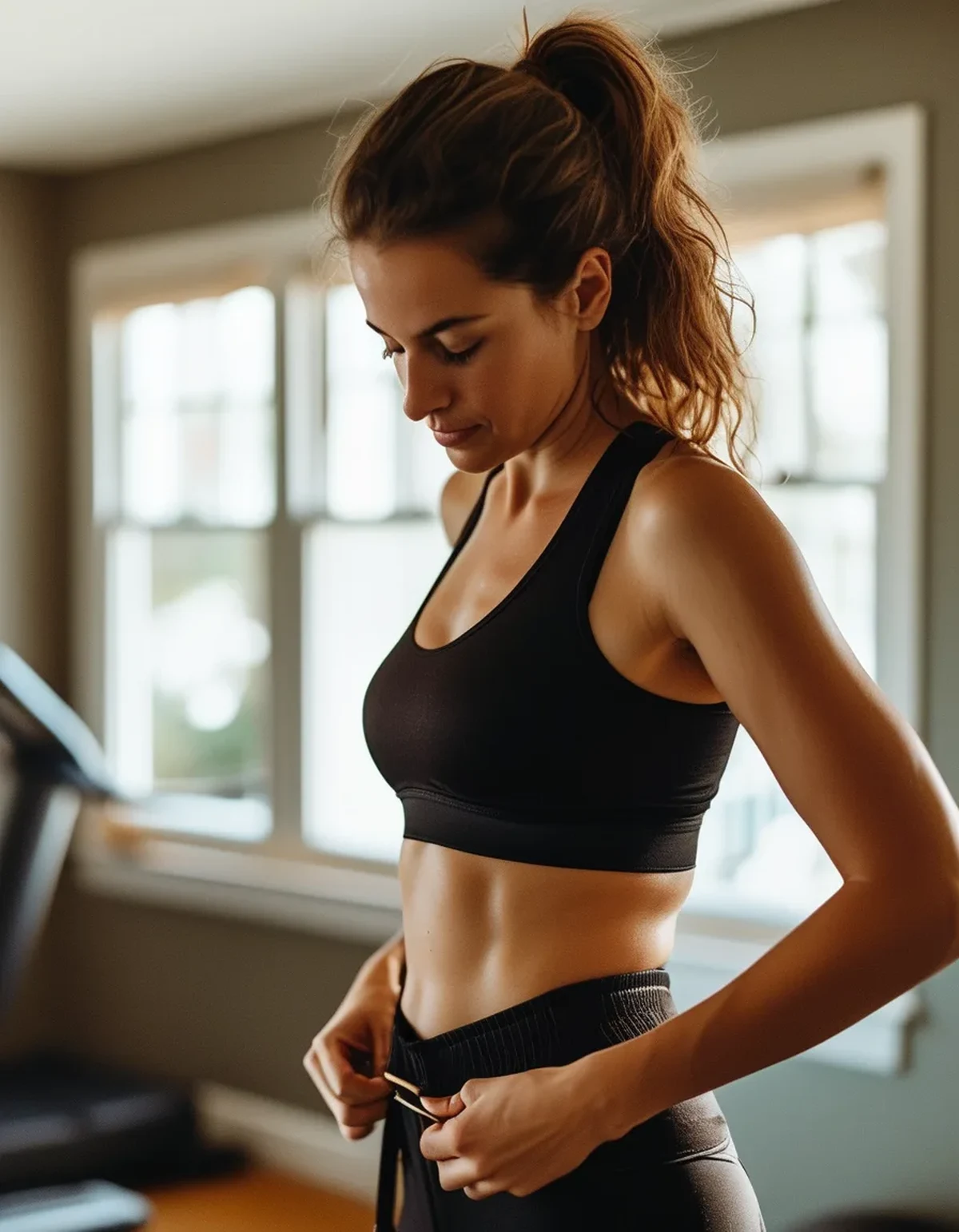
5 Fixes That Do Not Involve Buying New Leggings
1. Wear them higher than feels natural at first. Many people pull leggings to where they feel comfortable rather than to the actual top of the rise, which leaves the band below the waist from the start. Pull them fully up and let them settle.
2. Add a high-waisted layer over the band. A fitted tank or bike-short-style base layer tucked over the waistband adds friction and prevents rolling. It also solves the gap problem at the same time.
3. Silicone grip tape. Rolls of body tape designed for clothing, applied to the inside of the waistband, add grip against skin. Inexpensive, reusable in strips, and effective for a specific problem pair.
4. Wash them correctly to preserve what recovery is left. Cold wash, inside out, no fabric softener, no tumble drying. Heat and softener are the two things that destroy elastane fastest, and a pair that slides after a month usually met both.
5. Match the activity to the pair. A pair that is fine for walking and slides during burpees is not a failed pair — it is a pair with a use case. Keep the structural ones for high-impact work and the softer ones for yoga and rest days.
The one non-fix: sizing down. It tightens the hip, which pushes the band up and over, and it makes the fabric more likely to go sheer. If the leg fits and the waist does not, the problem is the rise or the ratio, not the size.
Does the fabric itself matter?
Yes, and it is the variable people account for least.
Elastane content. Below about 12 percent, leggings tend to have less holding power and rely more on fit precision. 18 to 25 percent gives real compression and grip. Higher is not automatically better — very high elastane can feel restrictive and can degrade faster if washed hot.
Nylon versus polyester base. Nylon blends generally feel softer and have a slightly higher friction coefficient against skin, which helps grip. Polyester tends to be more moisture-wicking and slightly slicker. Neither is better overall, but nylon blends are typically the ones described as feeling like they “stay put.”
Brushed interiors. The soft brushed finish on many popular leggings increases surface friction against skin, which genuinely helps them stay in place. It also makes them warmer, which is a trade-off in summer.
Fabric weight. Heavier fabrics — often described as sculpting or contour — hold shape and position better. Lightweight fabrics move more.
And the age factor: elastane degrades with heat, chlorine, sun exposure and body oils. A pair worn twice a week and washed correctly might hold structure for a year or more; the same pair tumble-dried weekly will lose it in a few months.
FAQ: Leggings Sliding Questions, Answered
Should I size up instead of down?
Sometimes, specifically if the waistband is rolling over from hip pressure. Sizing up relieves that pressure and often stops the roll. It will not fix a rise that is genuinely too short for your torso, which is a different garment problem.
Why do the same leggings stay up on my friend?
Different torso length and different hip-to-waist ratio. Leggings are drafted to a fit model, and the further your proportions sit from that model, the worse the fit behaves regardless of size. This is why brand loyalty in activewear is unusually rational.
Do they stretch out during a workout or is that in my head?
Both happen. Fabrics do relax slightly with body heat and movement over a session — a normal property called stretch relaxation, and it partially recovers after washing. If they are noticeably looser after 20 minutes every time, the fabric has too little recovery for the job.
Are drawcords worth seeking out?
If you have a smaller waist relative to your hips, yes — they are the only feature that adapts the garment to your ratio rather than assuming one. The trade-off is a small bulk at the front, which some people notice under fitted tops.
TL;DR:
- Where they end up tells you the cause: sliding down means rise, rolling over means hip-to-waist ratio.
- Look for a 10cm-plus structured waistband, an internal elastic band, a high rise and compression through the leg.
- Sizing down is usually the wrong move — it tightens the hip and pushes the band up.
- Silicone grip tape, a layered high-waist base, and correct washing all buy back performance.
- Nylon blends with 18 to 25 percent elastane and a brushed interior stay put best.
Most sliding leggings are a proportion mismatch, not a sizing error. Once you know which pattern you have, the fitting room gets a lot faster.
See It in Motion
Seen here: High Waist Yoga Leggings with Inner Pocket — shop it on bubblelime.com
Keep Reading
This article is for general informational and styling purposes only. Fit, sizing, and product availability may vary.