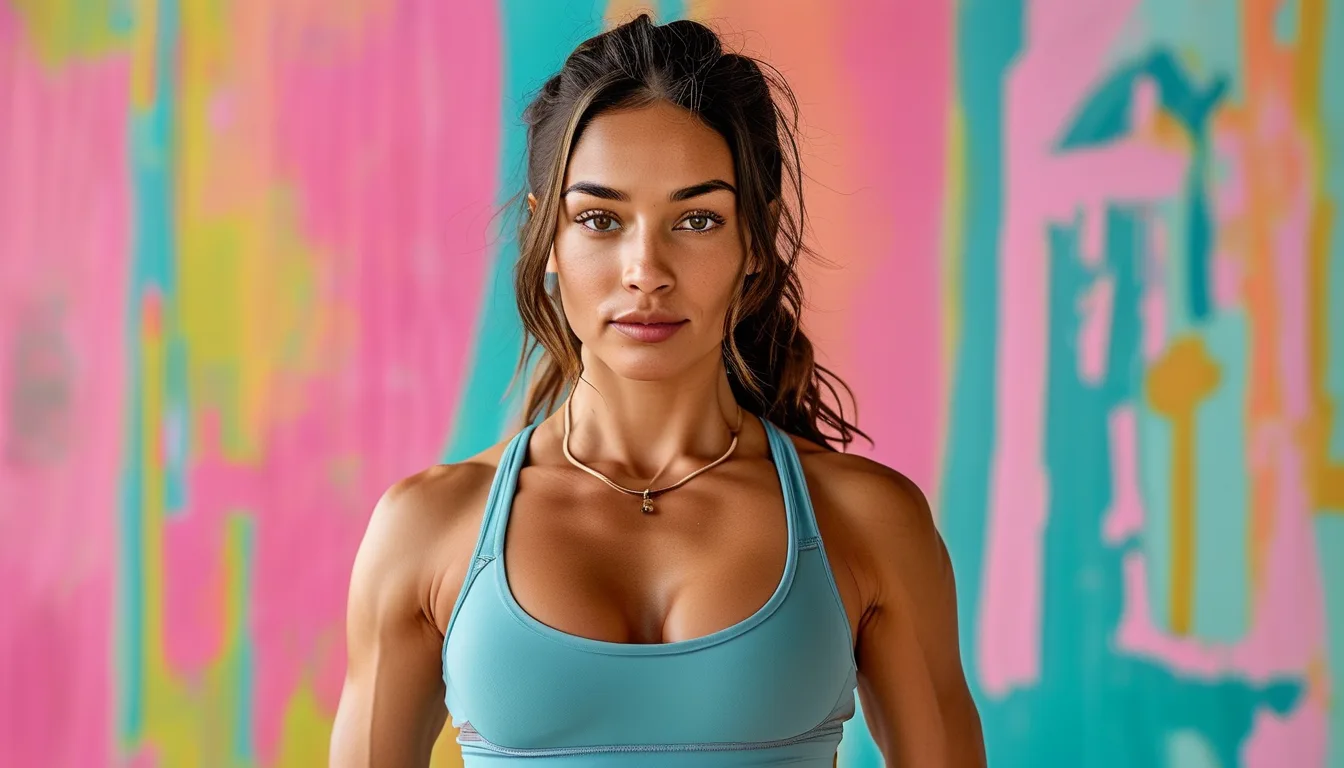
What to Wear to a First Personal Training Session
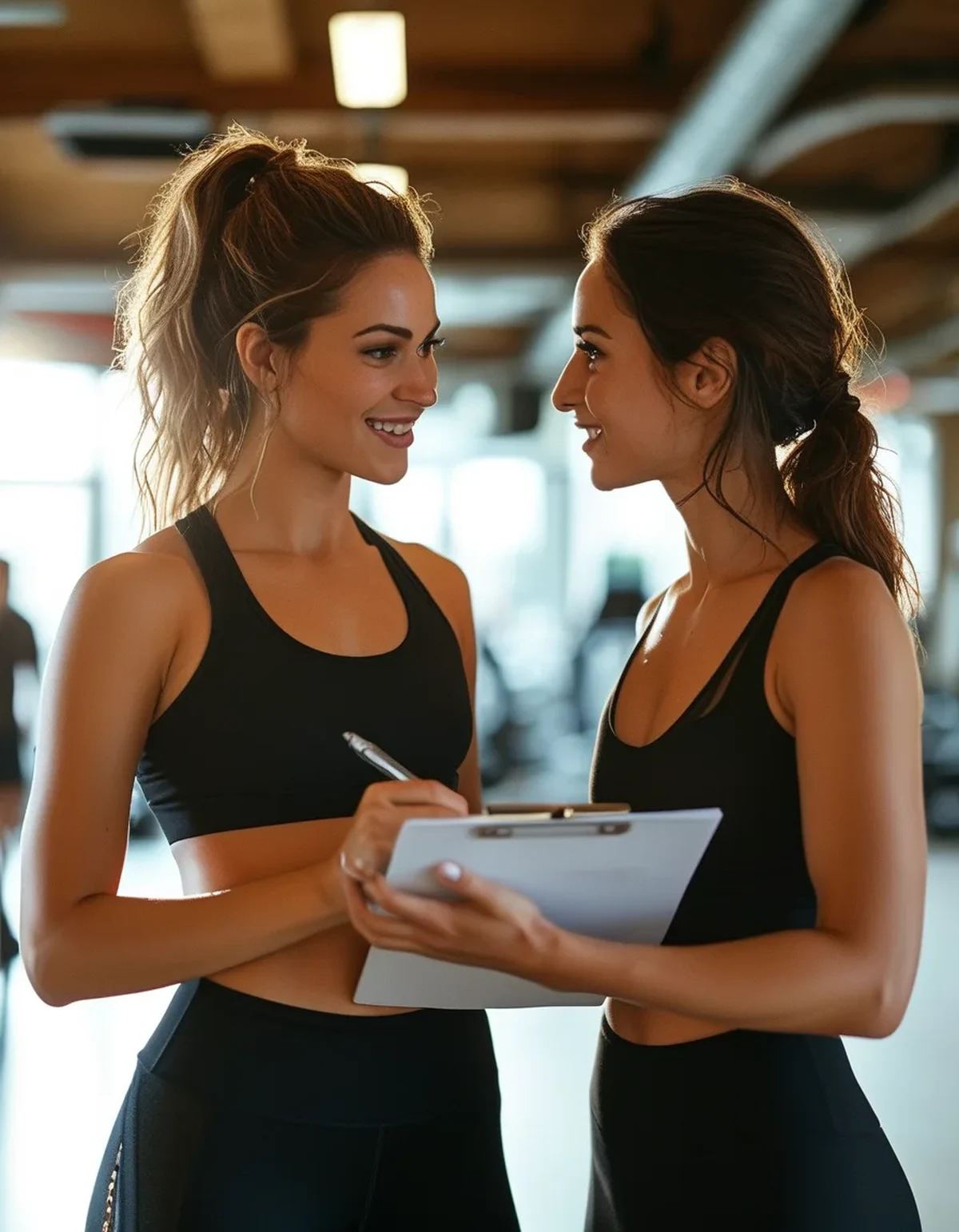
Quick Answer: A first session is largely an assessment, and your trainer needs to see your joints move. That means fitted rather than loose - a good trainer cannot assess a squat through an oversized hoodie, and they will spend the session guessing. Wear fitted leggings or shorts, a close-fitting top you are comfortable in, trainers with a flat stable sole, and a supportive sports bra. Skip the baggy layers, the brand-new shoes, and anything you have not moved in before. Bring a layer for afterwards rather than wearing it through.
The practical framing: dress for being looked at technically rather than for being looked at socially, and the session becomes worth what you paid for it.
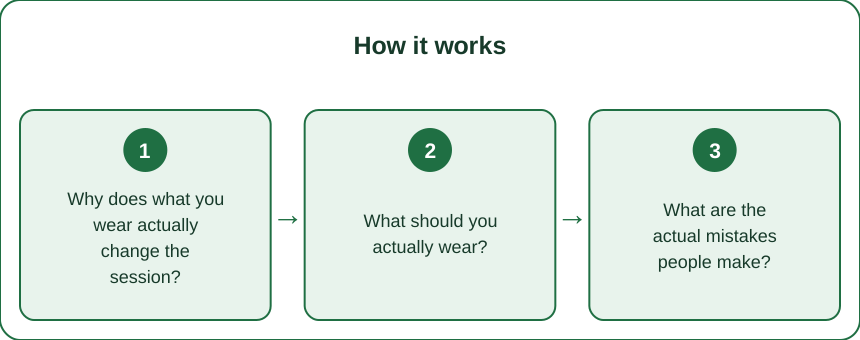
Why does what you wear actually change the session?
Because the first session is mostly information gathering, and clothing controls how much information is available.
A movement assessment needs visible joints. A trainer is watching knee tracking, hip hinge depth, spinal position, shoulder rotation, and foot position. Loose fabric hides all of it. In an oversized hoodie, a trainer genuinely cannot tell whether your lower back is rounding, and the assessment becomes guesswork.
The consequence is a worse programme. The plan they write is based on what they observed. If they could not observe much, the plan is generic - and a generic plan is exactly what you were paying to avoid.
It also affects the corrections you get. Cueing in real time depends on seeing what happens as it happens. Corrections you get in loose clothing are about tempo and effort; corrections you get in fitted clothing are about position.
And it affects the touch question. A trainer who cannot see your position may need to ask to place a hand on your back or hip to feel it. Fitted clothing usually removes the need entirely, which many people prefer.
None of this requires anything revealing. Fitted and covered is completely straightforward - full-length leggings and a fitted long-sleeve top shows every joint angle a trainer needs while covering everything.
What should you actually wear?
Piece by piece, with the reasoning.
Bottoms: fitted full-length leggings, or fitted shorts. Full-length is the more useful option because it lets a trainer see knee and hip position through the whole range. Avoid loose shorts, which hide the hip hinge - the single most important thing they will be assessing.
Top: fitted, and long enough to stay put. A top that rides up during overhead work is a distraction you will spend the session managing. A fitted t-shirt or long-sleeve is ideal. If you prefer more coverage, a fitted long-sleeve is better than a loose one.
Sports bra: properly supportive, and one you have trained in. A first session often includes movements you have not done - jumping, fast direction change, overhead work. This is not the day to test a new bra.
Shoes: flat, stable, and broken in. Running shoes with a thick cushioned heel are actively unhelpful for squatting and deadlifting because the compressible heel makes you less stable. A flat trainer or a cross-training shoe is far better. If you only own running shoes, that is fine - just mention it.
Socks: proper socks, not no-show ones that slip. Small thing, real irritation.
Hair: tied properly and off your face. You will be lying on your back, upside down at times, and looking in mirrors.
What to leave off: jewellery, a watch you care about, and anything with a hood that gets in the way of lying flat.
What are the actual mistakes people make?
Five, and they are consistent.
1. Wearing new shoes. Brand-new trainers for a first session is a recipe for blisters during unfamiliar movement, and you do not yet know how they behave. Wear what you have been walking in.
2. Dressing for the gym rather than for the session. A matching set that looks good standing still may ride, roll, or dig once you are in a deep squat. Do a squat and a forward bend at home in whatever you plan to wear - it takes ten seconds and it tells you everything.
3. Layering to hide. Extremely common and completely understandable, and it costs you the value of the session. If you are self-conscious, fitted and fully covered is the answer - a long-sleeve fitted top and full-length leggings - not loose and baggy.
4. Wearing something with a rigid waistband. Anything with a stiff band or a zip at the waist digs in during hinging and floor work. Soft high-waisted is far more comfortable for an assessment session with a lot of floor work.
5. Overdressing for the temperature. First sessions are usually more talking than working, so you may be cooler than in a normal workout. But they can also be surprisingly hard. A layer you can remove is the answer, rather than committing either way.
What should you bring besides clothes?
A short list, and one of them matters more than the rest.
Water. Obvious, and first sessions often run long.
A small towel. For equipment and for you.
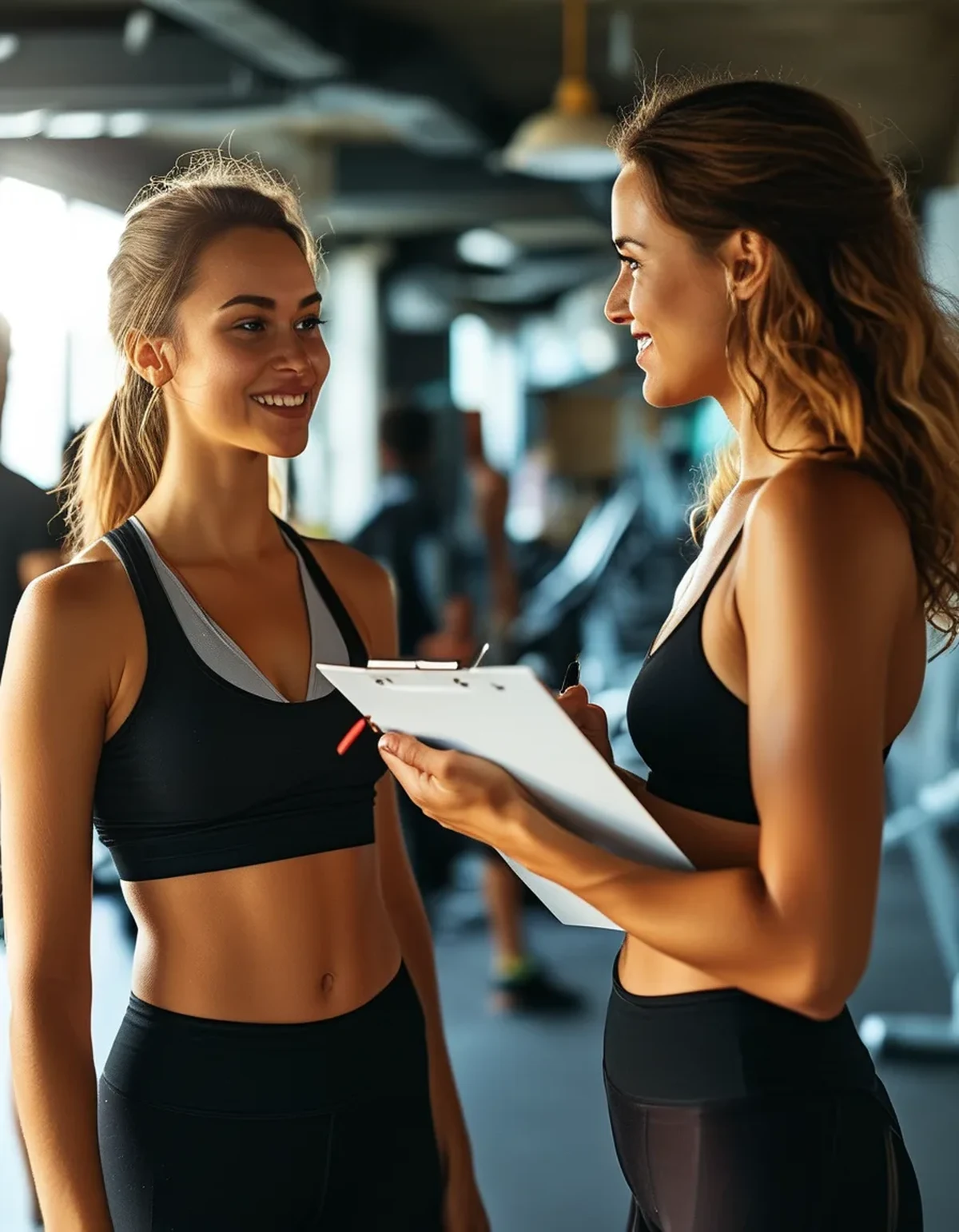
Something to write with, or your phone. You will be given information you will not remember - exercise names, cues, sets and reps. Trainers vary in how much they write down for you. Asking to photograph or record the plan at the end is completely normal.
Any relevant medical information. Previous injuries, surgeries, current niggles, medications that affect exercise. This is the single most useful thing you can bring, and people consistently under-share it because they do not want to seem difficult. A trainer cannot programme around an injury they do not know about. If you have a condition or a recent injury, checking with your doctor before starting is worth doing - this is general information, not medical advice.
Your actual goal, in a sentence. Not lose weight or get fit - something specific. Being able to carry my kid upstairs without stopping, or run a 10k in April. A specific goal changes the programme substantially.
A layer for afterwards. Particularly now, when the walk home is cold and you will be warm and possibly damp.
Does the session type change what you wear?
Somewhat. The principles hold, the details vary.
Strength-focused first session. Flat shoes matter most here. Squatting and deadlifting in cushioned running shoes is genuinely worse, and it is the one equipment change worth making before you start.
Conditioning or fat-loss focused. More sweat, so moisture-wicking fabric and a bra you can move fast in. Bring a change of top if you are going somewhere afterwards.
Rehab or mobility focused. Often more floor work. Softer waistbands, and check that your leggings do not go sheer when stretched - a genuine concern during floor-based hip work, and worth doing the bend-over-in-front-of-a-mirror test at home.
Outdoor sessions. Layers, and much more attention to the weather. Autumn outdoor PT means a warm-up layer you shed and put back on, plus something for wet ground if there is floor work.
Assessment-only first sessions are usually low intensity - lots of demonstrating and correcting. You may be cold rather than hot, so bring the extra layer.
If you do not know which it will be, ask when you book. A one-line message asking what the first session involves and what to wear is completely normal, and the answer makes all of this straightforward.
FAQ: Dressing for a First PT Session, Answered
Do I need to buy anything new?
Almost certainly not. The only common gap is footwear - if you own only heavily cushioned running shoes and you will be lifting, mention it and ask whether it is worth changing. Everything else you likely have.
What if I am not comfortable in fitted clothing?
Fitted and fully covered is the answer - long sleeves, full-length leggings. It gives your trainer everything they need and covers everything you want covered. Tell them if you would rather not be touched for corrections; that is completely normal and any good trainer will adjust.
Are leggings see-through in gym lighting a real worry?
Common enough to be worth checking. Squat in front of a mirror in natural light before you go - overhead gym lighting is harsher than home lighting.
Should I wear makeup?
Entirely up to you. Expect it not to survive a genuinely hard session.
What about a fitness tracker?
Useful, and most trainers are happy to use the data. A rigid-strap watch can be uncomfortable during floor work and barbell work.
Will they weigh or measure me?
Some do at a first session. You can decline, and you should say so at the start rather than in the moment if you would rather not.
TL;DR:
- A first session is an assessment, and your trainer needs to see joints move - loose clothing produces a generic programme.
- Fitted leggings or shorts, a fitted top that stays put, a supportive bra you have trained in.
- Flat stable shoes beat cushioned running shoes for anything involving squatting or hinging.
- If you are self-conscious, go fitted and fully covered rather than loose.
- Test the outfit at home: squat and bend in front of a mirror before you go.
- Bring your injury history and a specific goal - those change the programme more than anything you wear.
The short version is to dress so the session can do its job. An hour of a professional watching you move is worth a lot, and a hoodie is a surprisingly expensive thing to wear to it.
See It in Motion
Seen here: High Waist Yoga Leggings with Inner Pocket — shop it on bubblelime.com
Keep Reading
This article is for general informational and styling purposes only. Fit, sizing, and product availability may vary.