Understanding Workout Fabric Technology: What 'Moisture-Wicking' Labels Actually Mean
Quick Answer: Moisture-wicking means the fabric pulls sweat away from skin to the outer surface where it can evaporate; breathable means air can pass through the fabric weave to help cool skin; quick-dry means the fabric itself dries fast once wet — a fabric can have one property without the others, which is why a shirt can feel wicking but still stay visibly damp for a long time if it isn’t also quick-dry.
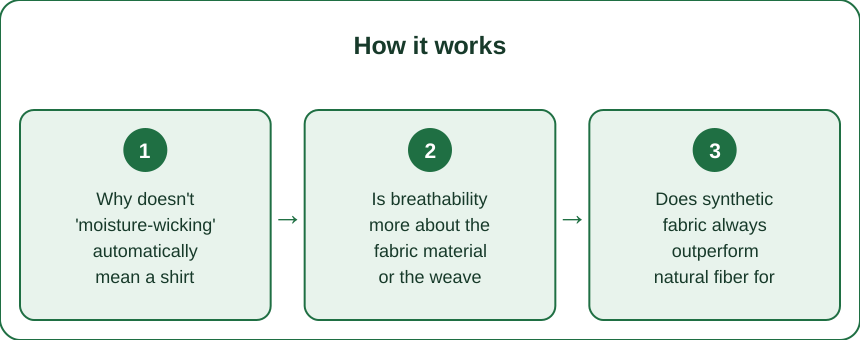
Why doesn’t ‘moisture-wicking’ automatically mean a shirt won’t feel wet?
Wicking moves sweat away from your skin to the fabric’s outer surface, but that moisture still has to evaporate from the fabric itself, which depends on quick-dry properties and how humid or breathable the surrounding air is. In very humid conditions, a wicking fabric can still feel damp because evaporation is slower, even though the sweat has technically been moved off your skin.
Is breathability more about the fabric material or the weave structure?
Both matter, but weave structure (looser knits, mesh panels) has a bigger direct impact on breathability than fiber type alone. A tightly woven synthetic can actually breathe less than a looser natural-fiber weave, which is why fabric technology claims on a tag don’t tell the full story without also considering how the garment is actually constructed.
Does synthetic fabric always outperform natural fiber for workouts?
Synthetic fabrics (polyester, nylon blends) generally wick and dry faster than natural fibers like cotton, which absorbs and holds moisture rather than moving it away. But natural fibers like merino wool are an exception — they manage moisture well and add natural odor resistance, which is why merino blends show up in higher-end performance gear despite being a natural fiber.
Myth vs Fact: Workout Fabric Technology
Myth: Any synthetic activewear fabric is automatically moisture-wicking. Fact: Wicking requires a specific fiber treatment or weave design — plain polyester without that engineering can trap moisture similarly to cotton. Myth: A higher price always means better fabric technology. Fact: Price often reflects brand and design more than the underlying fabric performance — checking the actual fabric composition and any technology claims matters more than price alone.
FAQ: Workout Fabric Technology Questions, Answered
Does washing affect how well moisture-wicking fabric performs over time?
Yes, fabric softener and certain detergents can coat wicking fibers and reduce their effectiveness over repeated washes — using a light detergent without fabric softener helps wicking performance last longer.
Is cotton ever a reasonable choice for a workout?
For low-sweat activities like a casual walk or light stretching, cotton is fine, but for anything sweat-intensive, it holds moisture against skin longer and takes much longer to dry than performance fabrics.
Do fabric technology claims differ meaningfully between budget and premium activewear brands?
Sometimes — some budget brands use genuinely comparable synthetic wicking fabric, so checking the actual fabric composition and any named technology (rather than assuming based on brand alone) is the more reliable approach.
TL;DR:
- Moisture-wicking, breathable, and quick-dry are three separate fabric properties
- A wicking fabric can still feel damp if it isn’t also quick-dry in humid conditions
- Weave structure affects breathability as much as the fiber type itself
- Merino wool is a natural-fiber exception that manages moisture well
Reading past the marketing buzzwords to the actual fabric properties helps match clothing to the specific workout, not just the general category of ‘activewear.‘
See It in Motion
Seen here: High Waist Yoga Leggings with Side Pockets — shop it on bubblelime.com
Keep Reading
This article is for general informational and styling purposes only. Fit, sizing, and product availability may vary.